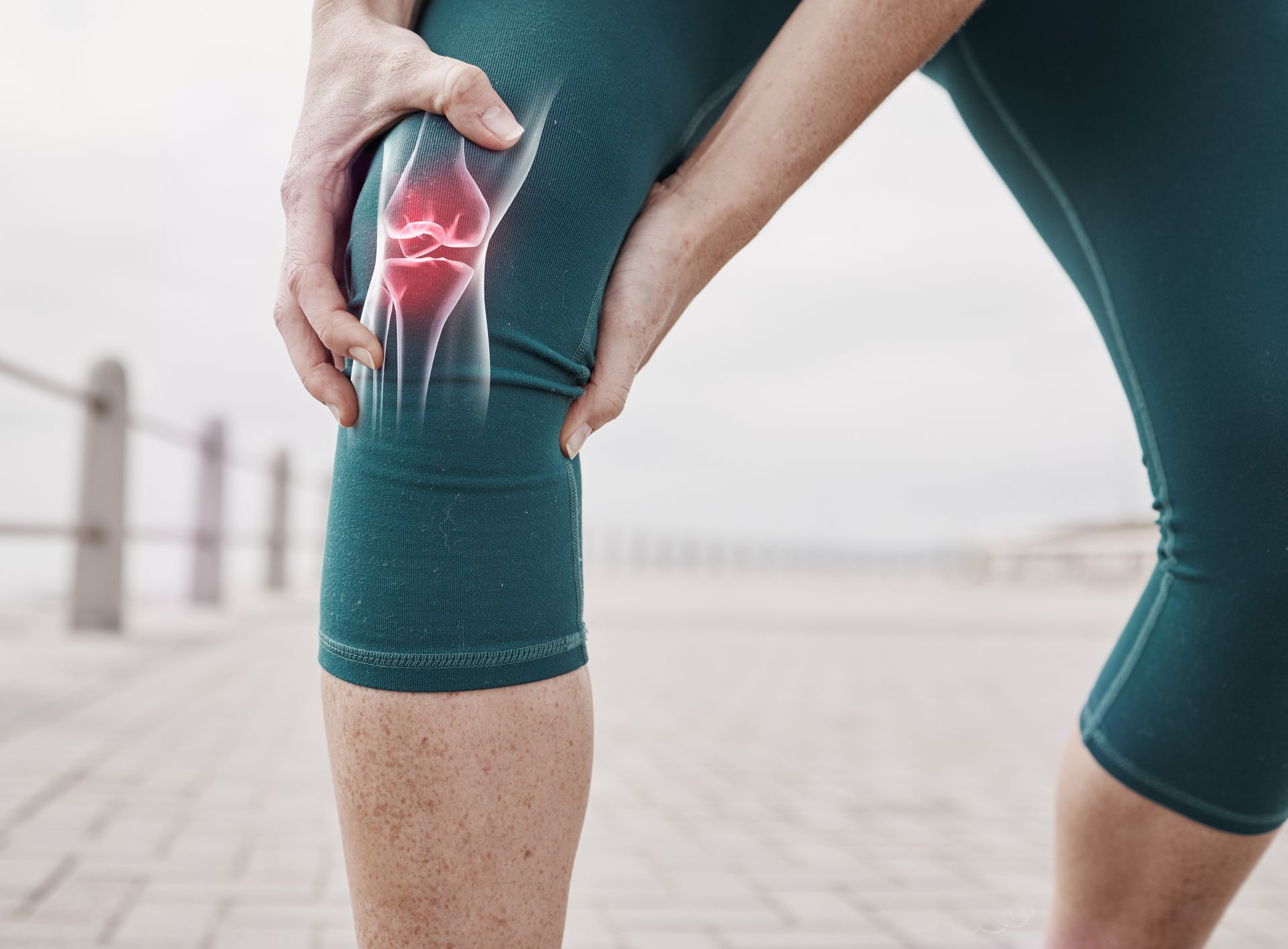
Why Does Your Knee Feel Stiff After Sitting?
Have you ever stood up after sitting at your desk, watching television, or taking a long car ride and noticed that your knee feels stiff or uncomfortable? You might need a few steps before your knee begins moving normally again. While occasional stiffness is common, persistent discomfort may indicate an underlying joint problem.
Knee stiffness after sitting can be associated with arthritis, inflammation, or age-related joint changes. Understanding why it happens can help you recognize when professional care may be beneficial.
At Chronic Care of Richmond, patients can explore personalized, non-surgical treatment options designed to address knee discomfort, improve mobility, and support long-term joint health.
Why Do Knees Get Stiff After Sitting?
Your knees are designed for movement. When you walk, bend, or straighten your legs, the joint's structures work together to support smooth motion.
During extended periods of sitting, your knees remain in a relatively fixed position. This inactivity can make existing joint problems more noticeable when you stand.
Several factors may contribute to stiffness:
- Reduced joint movement: Remaining in one position can temporarily make the knee feel less flexible.
- Joint inflammation: Irritated tissues surrounding the knee may cause swelling and discomfort.
- Cartilage deterioration: Changes in protective cartilage can interfere with comfortable movement.
- Muscle tightness: Tight muscles surrounding the knee can restrict mobility.
- Underlying arthritis: Degenerative joint conditions frequently cause stiffness after inactivity.
Identifying the cause is important because knee stiffness can develop for different reasons.
How Knee Arthritis Contributes to Stiffness
One of the most common causes of persistent knee stiffness is osteoarthritis, a degenerative condition affecting cartilage and other structures within the joint.
Healthy cartilage provides a smooth surface that allows bones to move against one another with minimal friction. As osteoarthritis progresses, cartilage can deteriorate, and changes may develop in surrounding tissues.
People with knee osteoarthritis often experience a symptom called gelling, which describes stiffness that develops after inactivity.
Common symptoms include:
- Difficulty straightening the knee after sitting
- Stiffness during the first few steps
- Aching discomfort around the joint
- Grinding or crackling sensations
- Reduced flexibility when bending the knee
For many people, stiffness improves after several minutes of gentle movement. However, symptoms may become more frequent as joint degeneration progresses.
Can Inflammation Make Knee Stiffness Worse?
Inflammation is another factor contributing to knee discomfort.
The knee contains a lining called the synovium, which produces fluid that helps lubricate the joint. When this lining becomes irritated, additional fluid may accumulate, contributing to swelling and restricted movement.
Inflammation may develop alongside osteoarthritis, inflammatory arthritis, injuries, or other joint conditions.
You might notice that your knee feels swollen, tender, or difficult to bend after sitting. Some people also experience warmth around the affected joint.
Persistent symptoms deserve professional evaluation to determine whether inflammation, structural changes, or another condition is responsible.
Does Knee Stiffness Mean You Have Bone-on-Bone Arthritis?
Not necessarily. Although advanced osteoarthritis can cause significant stiffness, discomfort after sitting does not automatically mean you have severe cartilage loss.
The term bone-on-bone generally describes advanced joint degeneration in which substantial cartilage loss causes significant narrowing of the space between bones.
However, stiffness can occur during earlier stages of arthritis or result from conditions unrelated to advanced degeneration.
Symptom severity also does not always match the degree of joint damage visible on imaging. A comprehensive evaluation can help clarify the underlying cause.
Ways to Reduce Knee Stiffness After Sitting
Several everyday habits may help manage mild stiffness and maintain comfortable movement.
- Change positions regularly. Standing and walking periodically can help prevent stiffness.
- Practice gentle movement. Slowly bending and straightening your knee while seated may maintain flexibility.
- Strengthen surrounding muscles. Appropriate exercises targeting the quadriceps and hamstrings can improve joint stability.
- Choose low-impact activities. Walking or swimming may help maintain mobility without excessive joint stress.
- Stay consistently active. Regular, manageable physical activity can support joint function.
If stiffness is persistent or accompanied by significant pain, consult a healthcare professional before beginning a new exercise routine.
When Should You Seek Professional Care?
Occasional stiffness that quickly improves may not indicate a serious problem. However, recurring symptoms deserve attention, particularly when they interfere with daily activities.
Consider scheduling an evaluation if you experience persistent knee pain, frequent swelling, worsening stiffness, difficulty climbing stairs, or reduced mobility.
Sudden severe swelling, fever with a hot or red knee, or an inability to bear weight warrants prompt medical attention.
Personalized Knee Pain Treatment in Richmond
At Chronic Care of Richmond, understanding the underlying source of knee discomfort is an important part of developing an appropriate treatment plan.
The team evaluates factors contributing to chronic knee stiffness, including joint degeneration, inflammation, mobility limitations, and individual health concerns.
Depending on the patient's condition and goals, personalized non-surgical care may focus on managing discomfort, improving joint function, and supporting everyday movement.
We offer all natural, non-drug, non-surgical solutions for knee pain including Platelet Rich Plasma (PRP) which reduces inflammation and pain, Class IV Laser, a completely non-invasive treatment that reduces pain and inflammation, and regenerative medicine using stem cells. This treatment addresses your knee pain at its source and regenerates the tissue to provide healing, stability, and improvement in stiffness and pain.
If your knee regularly feels stiff after sitting, professional evaluation can help you understand your symptoms and explore treatment options.
Contact Chronic Care of Richmond to learn more about personalized knee pain care and take the next step toward greater comfort and mobility.